
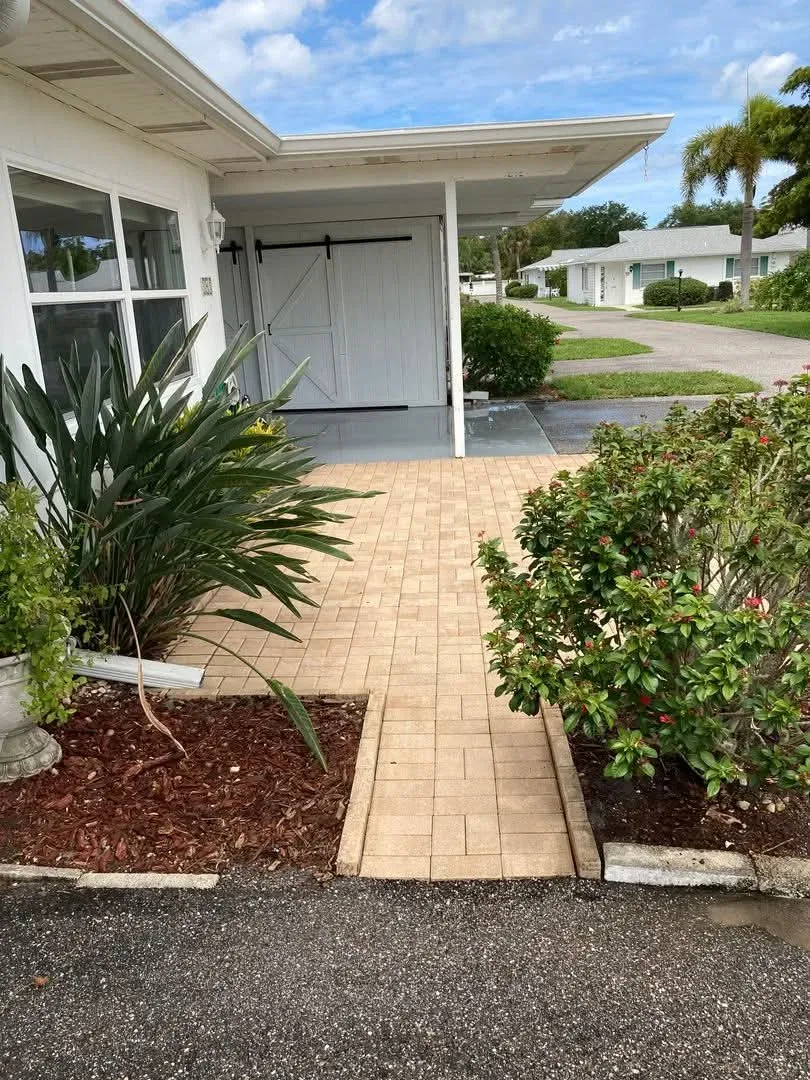
Paver Sealing
Sealing for brick paver driveways and walkways after cleaning, to hold the colour and slow the growth coming back. Free estimates by text, phone or online.
See Paver Sealing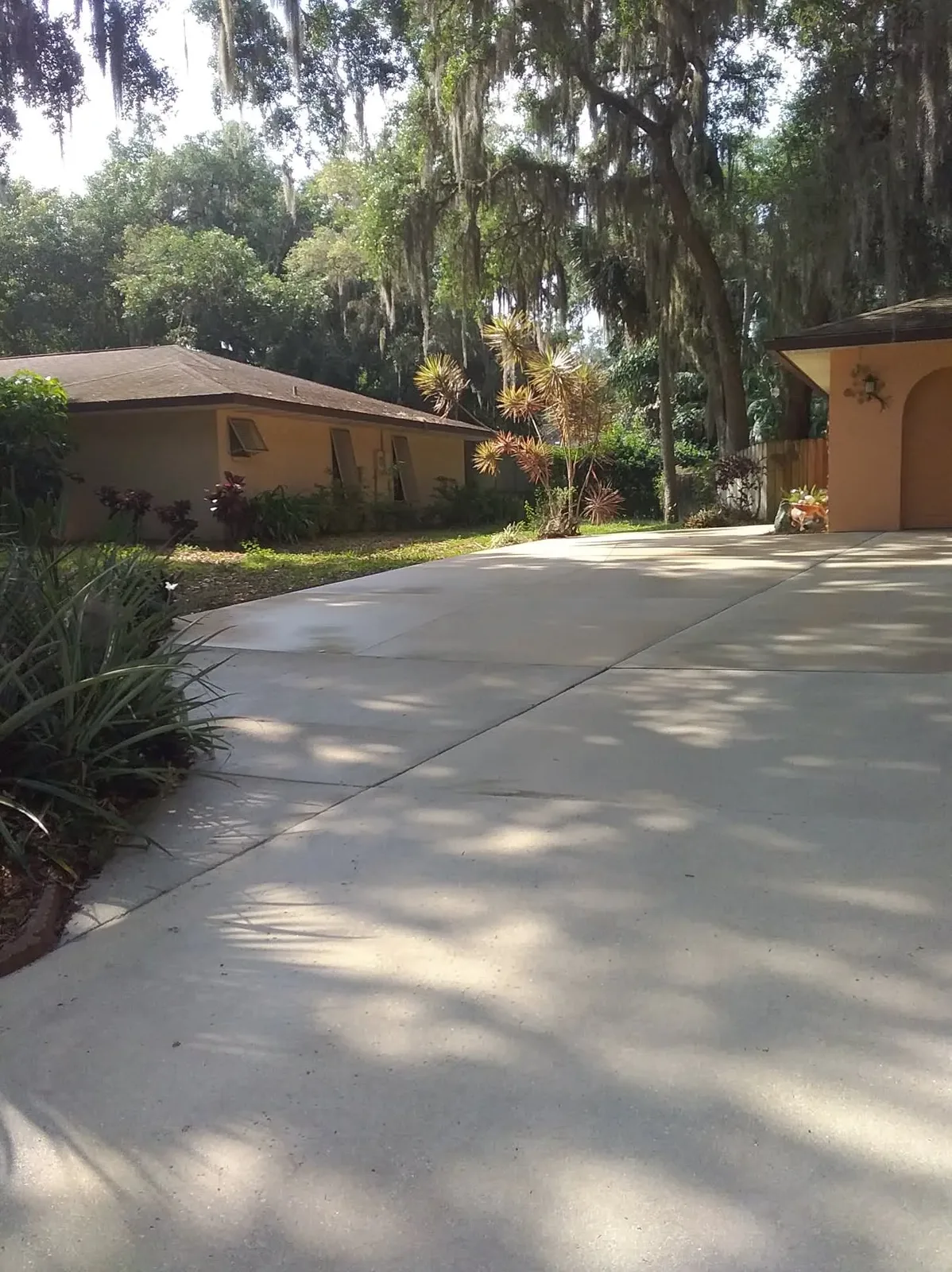
Concrete, brick pavers, sidewalks and curbing cleaned at 3000 to 4000 PSI. Hard surfaces only, where real pressure is the right tool.
Sarasota driveways, pavers and walkways cleaned at 3000 to 4000 PSI. Oak tannin, shaded slabs and HOA notices. Mr. Pressure Cleaning has worked Sarasota County for over a decade, out of North Port. Estimates are free and quoted online, by text or over the phone, never in person. Call (941) 257-8624.
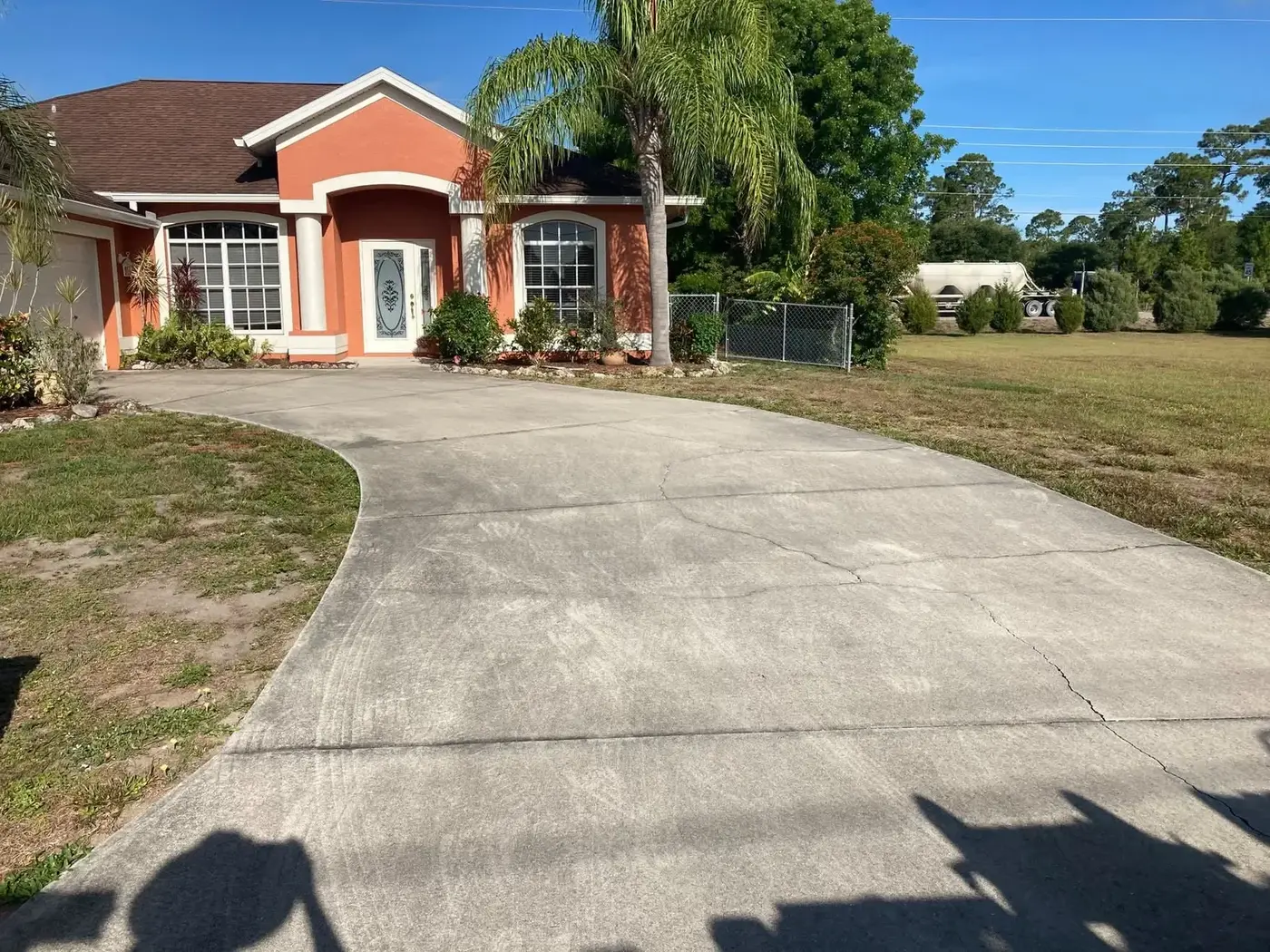
Sarasota is a paver town in the newer half and a concrete town in the older half, and the two go bad differently. Brick pavers through Palmer Ranch and the east side builds grow in the joints first, because the sand between them holds water long after the brick face has dried. Concrete drives in the post war grids grow in the pores of the slab itself, which is why the stain sits down in the surface rather than on it. Both get 3000 to 4000 PSI, which is real pressure on the surfaces built to take it.
That number is the top of the range we use and it stays on hard flatwork. Roofs get a maximum of 70 PSI, screens and walls get 900 to 1200, driveways and pavers and sidewalks get the machine. Growth that blackens a driveway roots into the surface instead of sitting on top, so a light pass just polishes it and the stain is back inside a few weeks. Matching pressure to surface is the whole discipline, and the driveway is the one place where full pressure is the correct answer.
Oak is hard on a driveway in two separate ways. It shades the slab so it never fully dries, which is the growth half, and it drops leaves and tannin onto it, which is the staining half. They look similar from the front door and they are not the same thing. Green and black in the pores is growth and it comes out under pressure. Tannin is a stain that has soaked in, it tends to read brown or rust rather than green, and how much of it lifts depends on how long it has been sitting there. You will get told which one you are looking at before the job is booked, not after.
The shaded strip is where it starts on nearly every property here. The walkway down the side of the house, the path from the drive to the door, the concrete beside the lanai, the piece under the oak that never sees direct sun. Those go slick before they look bad enough for anyone to comment on, and slick is a falling problem rather than a cosmetic one. On a house where somebody is carrying groceries up that path in the dark, it is the surface worth doing first.
In the deed restricted communities the driveway is often what draws the notice rather than the roof, because it is the thing the whole street looks at from eye level. Pavers make that more visible still: growth in the joints outlines every single brick, so a paver drive that has gone shows its condition in a grid pattern that is very hard to ignore. The joints rinse, the sand that washed out gets addressed as part of the work, and what the community requires is worth confirming with them directly.
Gulf Gate, Palmer Ranch, Bee Ridge, Fruitville, Arlington Park, The Meadows, Laurel Park, Southgate.
Every surface we clean gets its own pressure. Roofs get a maximum of 70 PSI from a battery pump. Pool cage screens and house exteriors get 900 to 1200 PSI. Concrete, brick and stone get 3000 to 4000 PSI, because they're the surfaces built to take it.
That range matters on a driveway. The growth that turns concrete black doesn't sit on top, it roots into the pores. Light pressure skims the surface and leaves the roots behind, and the staining is back before you've put the hose away. Real pressure takes it out of the pores. On a tile roof or a screen, that much force would be damage. On concrete it's just the right tool.
If it's a hard surface at ground level, this is the service that covers it. The equipment and the pressure are the same whether the job is a two car driveway or a parking lot.
Residential and commercial. Same weather, same growth, same fix.
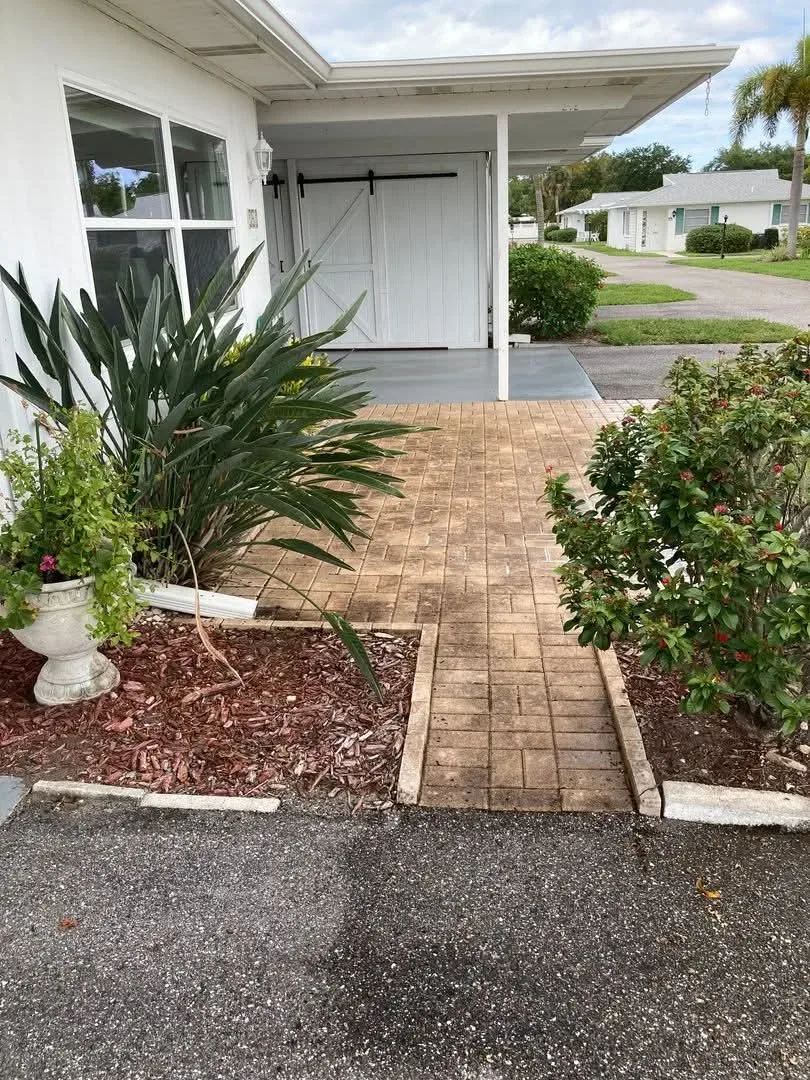
Brick pavers dull down grey, but the joints are where the growth really takes hold. Sand joints hold moisture, moisture feeds growth, and growth in the joints is what makes a paver walkway slick underfoot. Cleaning the paver faces and leaving the joints green is half a job, so we don't do it that way.
One thing driveway cleaning doesn't cover: sealing. If you want the colour held and the growth slowed down after a clean, that's paver sealing, and it's its own service with its own page. Sealing follows cleaning, never the other way round. If your pavers are worth sealing we'll say so at the estimate, and if they're not we'll say that too.
Driveways and walkways run beside lawns and planting beds, which is exactly why some people put cleaning off. The fear isn't the dirt. It's losing the landscaping.
Here's what actually happens. Where a job calls for a cleaning mix, the mix is matched to the surface it's on. Afterward we remove the chemical by diluting it down so far it stops acting on anything. Dilution is the solution. If you have irrigation along the drive, run it before we arrive and for at least a week to 10 days after we leave, so nothing dies at the root. That step isn't an extra we mention in passing. It's the part we lead with.
A stained sidewalk in front of a business reads as neglect before a customer ever reaches the door. We clean commercial concrete on the same equipment as residential work: parking lots, storefront sidewalks, curbing. Quoted the same way too. Online, by text or over the phone, free, before anything starts.
Nobody books a driveway clean the day it starts greying. They call when something forces the issue. These are the usual reasons:
Whatever brought you here, the estimate works the same way. Send a photo of the surface, or call and describe it, and Matt gives you a straight number back. Free, no obligation.
Matt answers his own phone. Not a call centre, not a callback three days later. The person who picks up is the person doing the work, and he shows up when he says he will.
Family owned and operated out of North Port, working the Gulf Coast for over a decade. If it's black or green, we will make it clean.
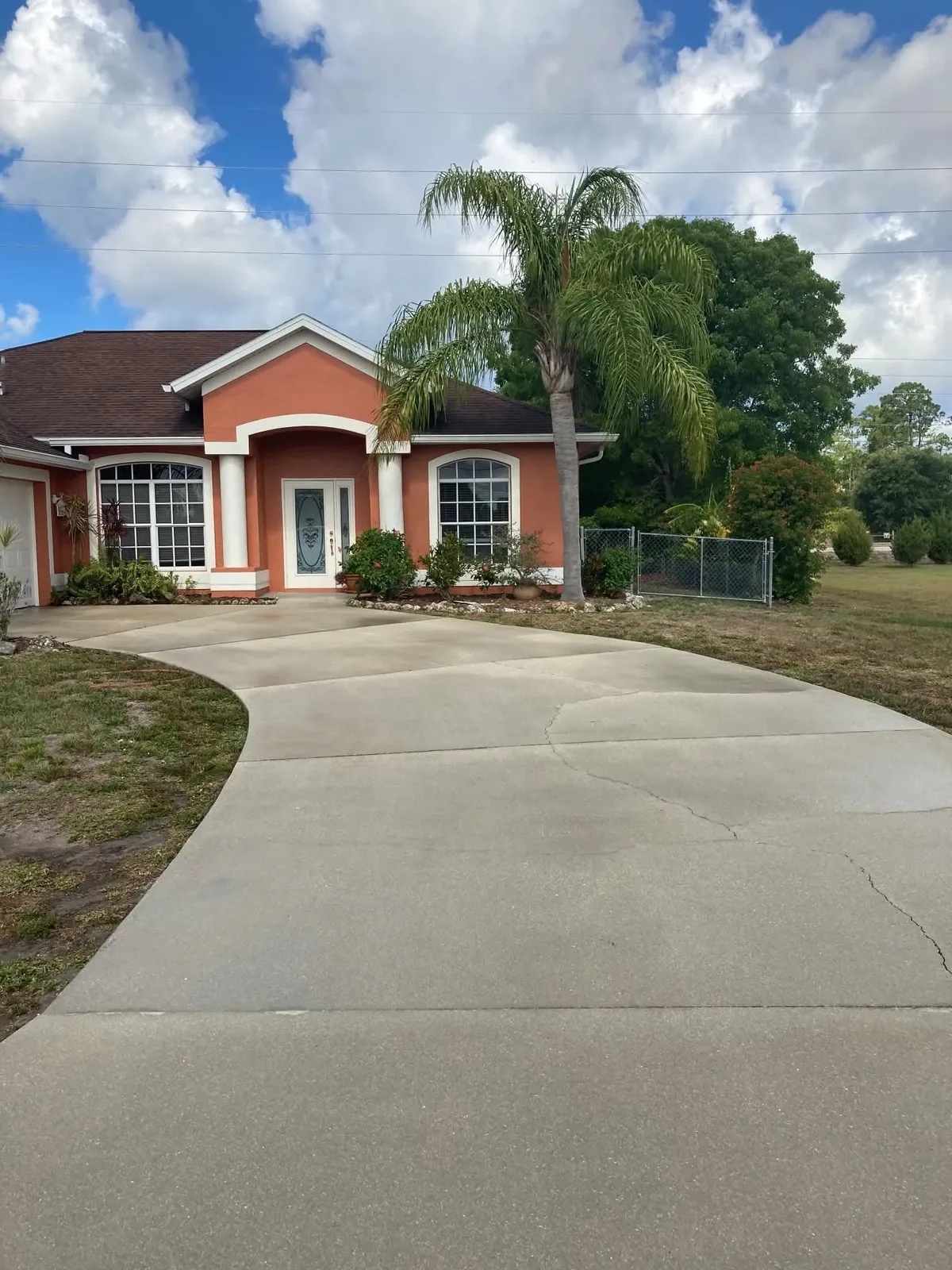
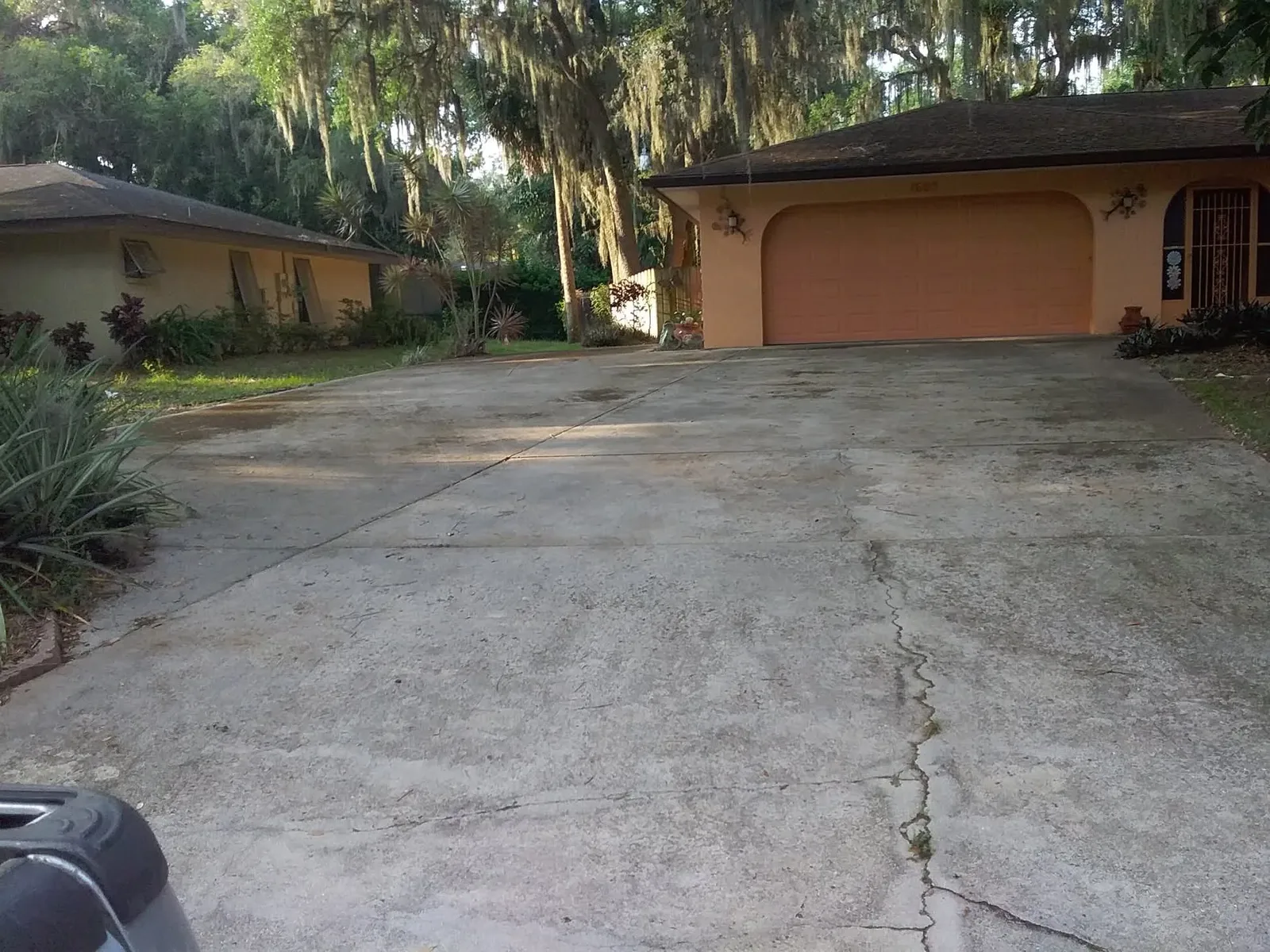 BeforeAfter
 BeforeAfter
 BeforeAfter
4.7 stars from 58 Google reviews.
Very happy with the job that was done on my driveway. It looks great! Thank you so much. I will call again.
Beverly Bearton, Google review
No. Hard surfaces are the one place 3000 to 4000 PSI belongs. Concrete, brick and stone are built to take it, and the growth rooted in their pores needs it. The surfaces that can't take that force never see it from us. Roofs get a maximum of 70 PSI and screens get soft wash pressure. Matching the pressure to the surface is the whole job.
Usually the same organic growth that streaks roofs around here, fed by heat, humidity and the rainy season. It looks permanent. It isn't. High pressure cleans it out of the pores of the concrete instead of skimming the top. If what you're looking at turns out to be something other than growth, send Matt a photo and he'll tell you straight.
That's the fear that stops most people booking, so here's exactly what happens. Any cleaning mix is matched to the surface it's on. Afterward we dilute the chemical down so far it stops acting on anything. Dilution is the solution. If you have irrigation near the drive, run it before we arrive and for a week to 10 days after we leave.
Sometimes. Sealing holds the colour and slows the growth coming back, and it only ever follows a cleaning, never replaces one. It's a separate service with its own page. If sealing makes sense for your pavers, Matt will say so at the estimate. If it doesn't, he'll say that too.
Results typically stay clean about a year. It's the same Florida weather afterward as before, so the growth does come back eventually. When the surface starts to grey again, call and we'll clean it again.
Every job is quoted free, online, by text or over the phone. Size and how deep the staining has set both move the number, so send a photo of the driveway and Matt sends a straight number back. No waiting on an appointment window, and no obligation either way.
That is usually oak tannin rather than growth, and it behaves differently. Growth comes out reliably under 3000 to 4000 PSI because it is living in the surface. Tannin has soaked in, so how much of it lifts depends on the surface and how many seasons it has been there. Some comes back to nearly nothing and some of it does not fully go. Send photos with your address and you will get a straight read on which parts are growth and which are stain before you commit to anything.
Cleaning pavers moves joint sand, that is unavoidable at the pressure the job needs, and anyone telling you otherwise is not being straight with you. It is a normal part of the work rather than damage. The growth is down in those joints, so the joints have to be cleaned or you have washed the tops of the bricks and left the problem outlining every one of them. What matters is that it gets dealt with as part of the job, and Matt will walk you through what your particular drive needs.
Not automatically, and it is a separate service with its own page. What is not optional is the order. Sealing over a dirty paver locks the growth and the staining in under the sealer, so if you are going to seal, the clean comes first every time. Whether yours is worth sealing at all depends on the pavers and what you want out of them, and that is a conversation rather than a default add on.
Mr. Pressure Cleaning works 50 miles either side of I-75, out of North Port. Same services, same Florida weather, in every town on the list.
Sealing for brick paver driveways and walkways after cleaning, to hold the colour and slow the growth coming back. Free estimates by text, phone or online.
See Paver Sealing
Whole exterior soft wash at 900 to 1200 PSI. Stucco, siding, soffit, fascia and the outside of your gutters, with the chemical diluted down after the rinse.
See House Washing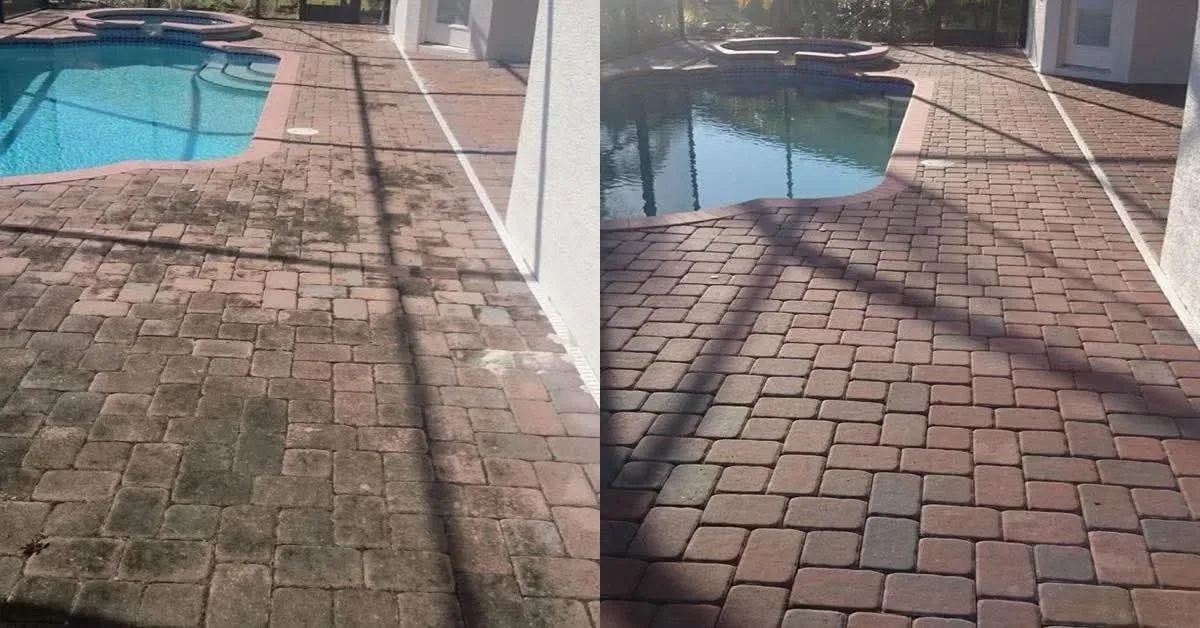
Screen enclosure and the deck under it, cleaned at 900 to 1200 PSI soft wash pressure so the screens and frames are not damaged.
See Pool Cage & DeckFree estimates, no obligation. Send a photo and get a real number back, online, by text or over the phone.