
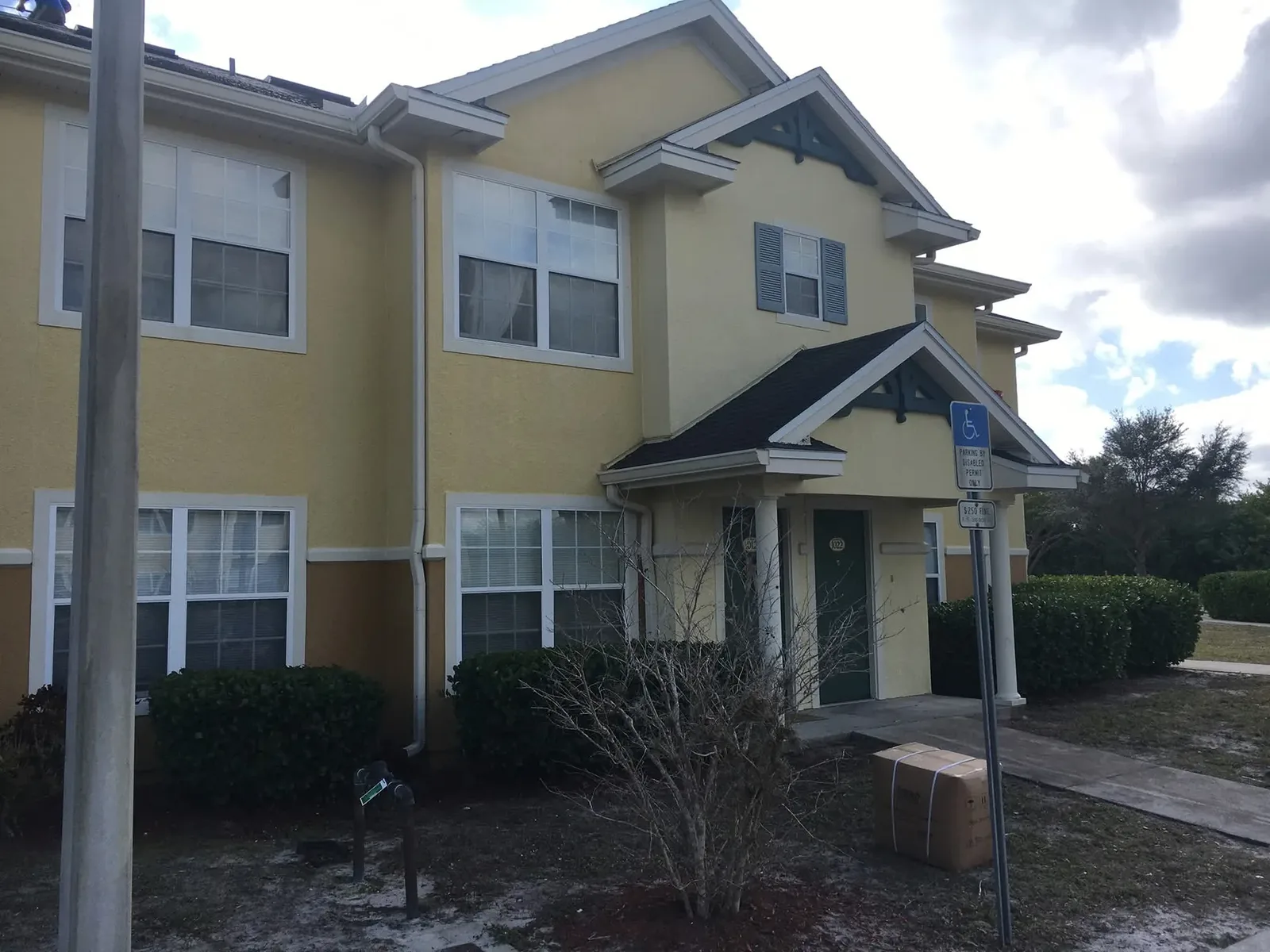
House Washing
Whole exterior soft wash at 900 to 1200 PSI. Stucco, siding, soffit, fascia and the outside of your gutters, with the chemical diluted down after the rinse.
See House Washing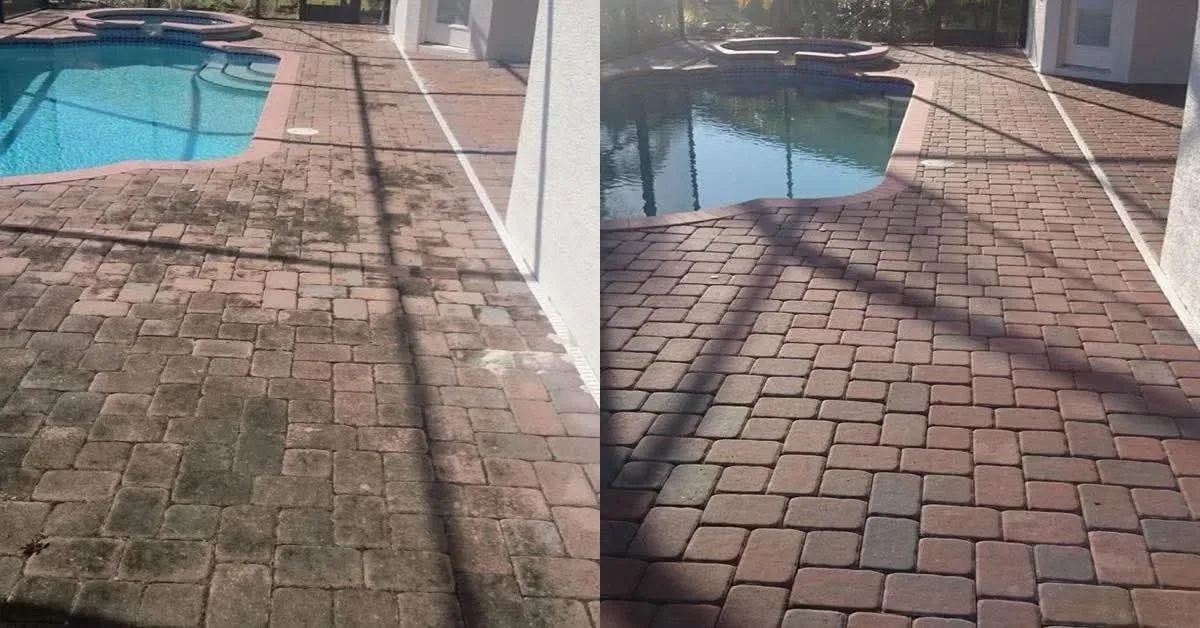
Screen enclosure and the deck under it, cleaned at 900 to 1200 PSI soft wash pressure so the screens and frames are not damaged.
North Port pool cage screens, aluminium frames and the deck under them cleaned at 900 to 1200 PSI without tearing a panel. Mr. Pressure Cleaning has worked Sarasota County for over a decade and is based right here. Estimates are free and quoted online, by text or over the phone, never in person. Call (941) 257-8624.
A screened cage is standard equipment on the newer North Port builds, and most of them are young. That's good news, because it means the grey you're looking at is almost certainly dirt rather than age. Screen mesh fogs over with the same growth that streaks the roof above it, and on a cage that has only been up a few years there's rarely anything wrong with the mesh underneath. It just hasn't been washed.
The whole enclosure gets 900 to 1200 PSI. Screens, aluminium frames and rails, and the deck under all of it, concrete or brick pavers. That's soft wash pressure, the same range that goes on soffit and fascia. Enough to lift the algae, gentle enough to leave the mesh in its splines. The 3000 to 4000 PSI that cleans a driveway never gets pointed at a screen. Quoted free from photos, online, by text or over the phone.
The overhead panels go first and nobody looks at them. They sit flat, they catch everything that falls, and the only thing that ever rinses them is rain, which brings more growth than it takes away. On the lots backing onto the community lakes and preserve edges in Heron Creek, Talon Bay and Lakeside Plantation there's standing water a few yards away and shade on one side, so the overhead greys up faster again. A cage that's clean at eye level and green above still reads dirty every time the sun comes through it.
There's no salt in this. North Port sits inland, so what's on a screen here is straight organic growth plus whatever the trees drop, oak litter and a heavy dusting of pollen in the spring. That's different from a coastal cage carrying salt film on top of the growth, and it's why an inland enclosure can look fine for a while and then turn quickly once the growth takes hold on the shaded side.
On the older streets the cages are older too, and that changes the honest answer. Old mesh is old mesh. Soft wash pressure won't hurt it, but no wash makes twenty year old screen look new, and anyone who promises that hasn't seen it. Send a photo of the enclosure and you get told which panels will clean up and which ones are simply done.
Wellen Park, Bobcat Trail, Heron Creek, Sabal Trace, Talon Bay, Lakeside Plantation, Warm Mineral Springs, North Port Estates.
The question everyone asks first: will it tear my screens? Not at the pressure we use. Screens and frames get 900 to 1200 PSI, and that number is the answer. Enough to lift the algae, gentle enough to leave the mesh and the frame alone.
Every surface we clean gets its own pressure. Roofs get a maximum of 70 PSI from a battery pump. Concrete gets 3000 to 4000 PSI, because concrete is built for it. A screen is not concrete, so it never gets concrete's pressure. Getting that judgement right, surface by surface, is the job you're actually hiring.
The whole enclosure, overhead panels included. A cage that's clean at eye level and green overhead still reads dirty every time the sun comes through it.
Screens, frame and deck get quoted together as one job, online, by text or over the phone. Residential and commercial.
Screen mesh fogs over with the same growth that streaks roofs here. Some of that grey is dirt and algae, and it washes off. Some of it is age, and no wash turns old mesh new.
You get a straight answer about which one you've got. Send Matt a photo of the enclosure and he'll tell you what cleaning will fix and what it won't, before you book anything.
The deck under a cage collects the same growth as the screens, and down there it's a slip problem as well as a grey one. The film that turns a pool deck green is the same film that makes it slick when it's wet, and around a pool it's always wet somewhere.
Screens, frames and deck get cleaned as one job, whether the deck is concrete or brick pavers. A bright cage over a green deck is half a job, so we don't do halves.
At soft wash pressure, the cleaning power comes from the mix, not the machine. We use surfactant based soap and degreaser mixes matched to each surface, so the growth lets go without the pressure doing damage.
Pool cages sit in the middle of the landscaping, with planting beds right against the frame. We remove the chemical by diluting it down so far it stops acting on anything. Dilution is the solution. If you have irrigation around the cage, run it before we arrive and for at least a week to 10 days after we leave, so nothing dies at the root. That's the step we lead with, because losing the landscaping is the fear that actually stops people booking.
These are the calls that usually come in:
Whichever one is yours, it starts the same way. Send Matt a photo of the enclosure, or call, and he tells you what it needs. Free.
Matt answers his own phone, and he shows up when he says he will. The person quoting your cage is the person cleaning it.
Family owned and operated out of North Port, working the Gulf Coast for over a decade. If it's black or green, we will make it clean.
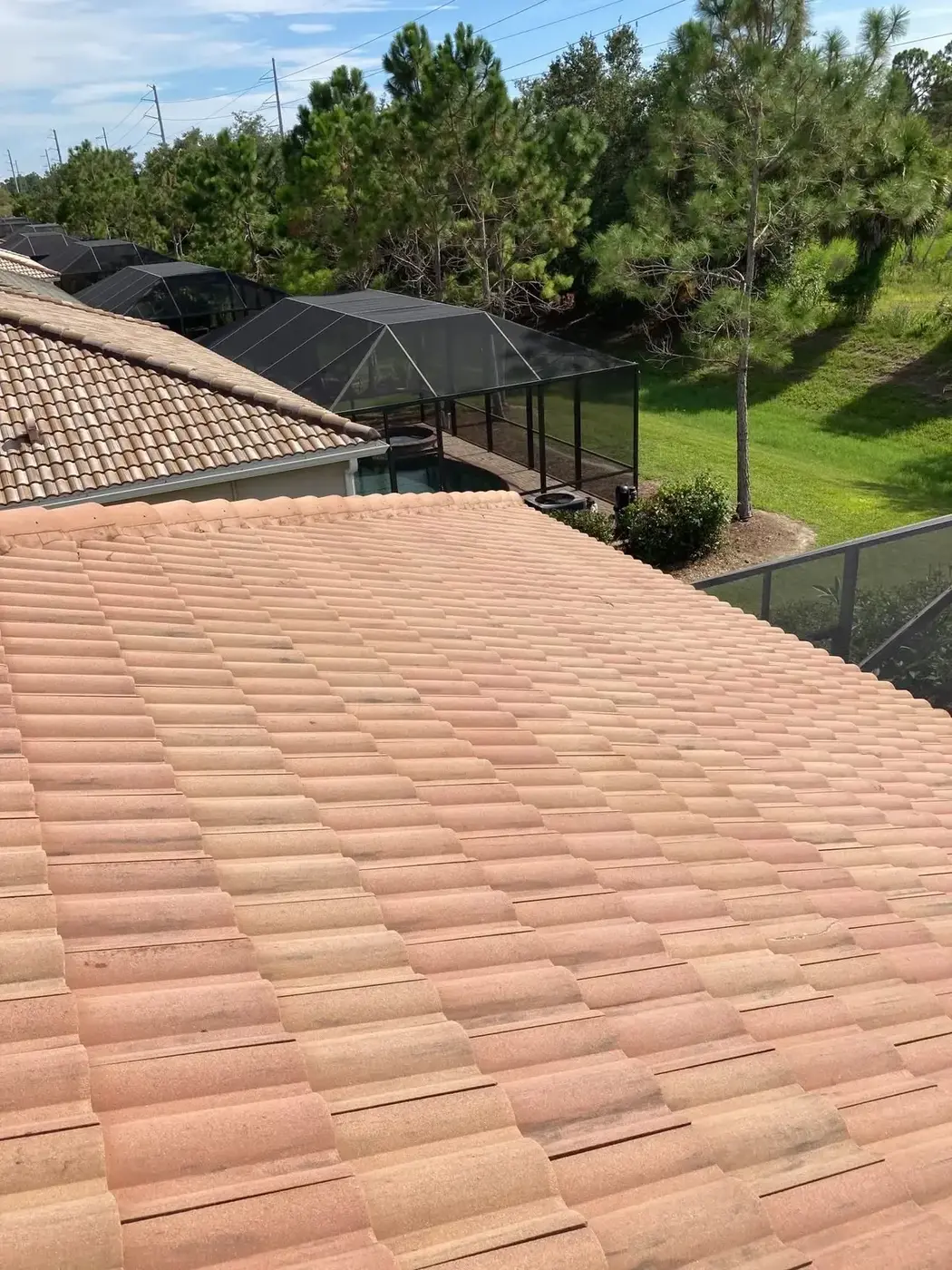
Not at the pressure we use. Screens and frames get 900 to 1200 PSI, soft wash pressure, the same range we use on soffit and fascia. The 3000 to 4000 PSI that cleans a driveway never gets pointed at mesh. The pressure is matched to the surface on every job, and screens are the clearest case there is.
Usually, because soft wash pressure is gentle by design. But old mesh is old mesh, and nobody should promise otherwise without seeing it. Send Matt a photo of the enclosure and he'll tell you straight what cleaning will fix, and whether any panel is too far gone to touch.
Both, as one job. Screens, frames and the deck under them, concrete or brick pavers. The deck is where the slip risk lives, so leaving it out would miss the point.
This is the step we lead with. The mix is matched to the surface, then removed by diluting it down so far it stops acting on anything. Dilution is the solution. If you have irrigation around the cage, run it before we arrive and for a week to 10 days after we leave. Losing the landscaping is the fear that stops most people booking, and this is the answer to it.
Results typically stay clean about a year. Same heat, same humidity, so the growth comes back eventually. When the screens start going grey again, that's the time to call.
Every job is quoted free, online, by text or over the phone. Cage size, deck size and how far the growth has gone all move the number, so send a photo or two and Matt gives you a straight answer back. No waiting on an appointment window. No obligation.
It usually makes it faster. Water a few yards away means more moisture in the air around the enclosure and longer to dry after rain, and growth runs on moisture. Nothing about the cleaning changes for it. What changes is the calendar, so a lake side cage may want attention sooner than the same cage on a dry interior lot. We'll tell you which one you've got rather than putting you on a schedule you don't need.
Completely normal, and it's the good version of the problem. Young mesh going grey is almost always dirt and algae, which comes off. The panels people worry about are the twenty year old ones where some of the grey is the mesh itself. On a newer North Port cage you're usually looking at a wash, not a screen job.
Yes, and it's worth timing. The yellow dusting in spring rinses off easily, but if the pollen is still falling it'll be back on there within a week, so most people wait it out and have the enclosure done once it's finished. The grey underneath is growth, and that's what the mix is actually for.
Mr. Pressure Cleaning works 50 miles either side of I-75, out of North Port. Same services, same Florida weather, in every town on the list.
Whole exterior soft wash at 900 to 1200 PSI. Stucco, siding, soffit, fascia and the outside of your gutters, with the chemical diluted down after the rinse.
See House Washing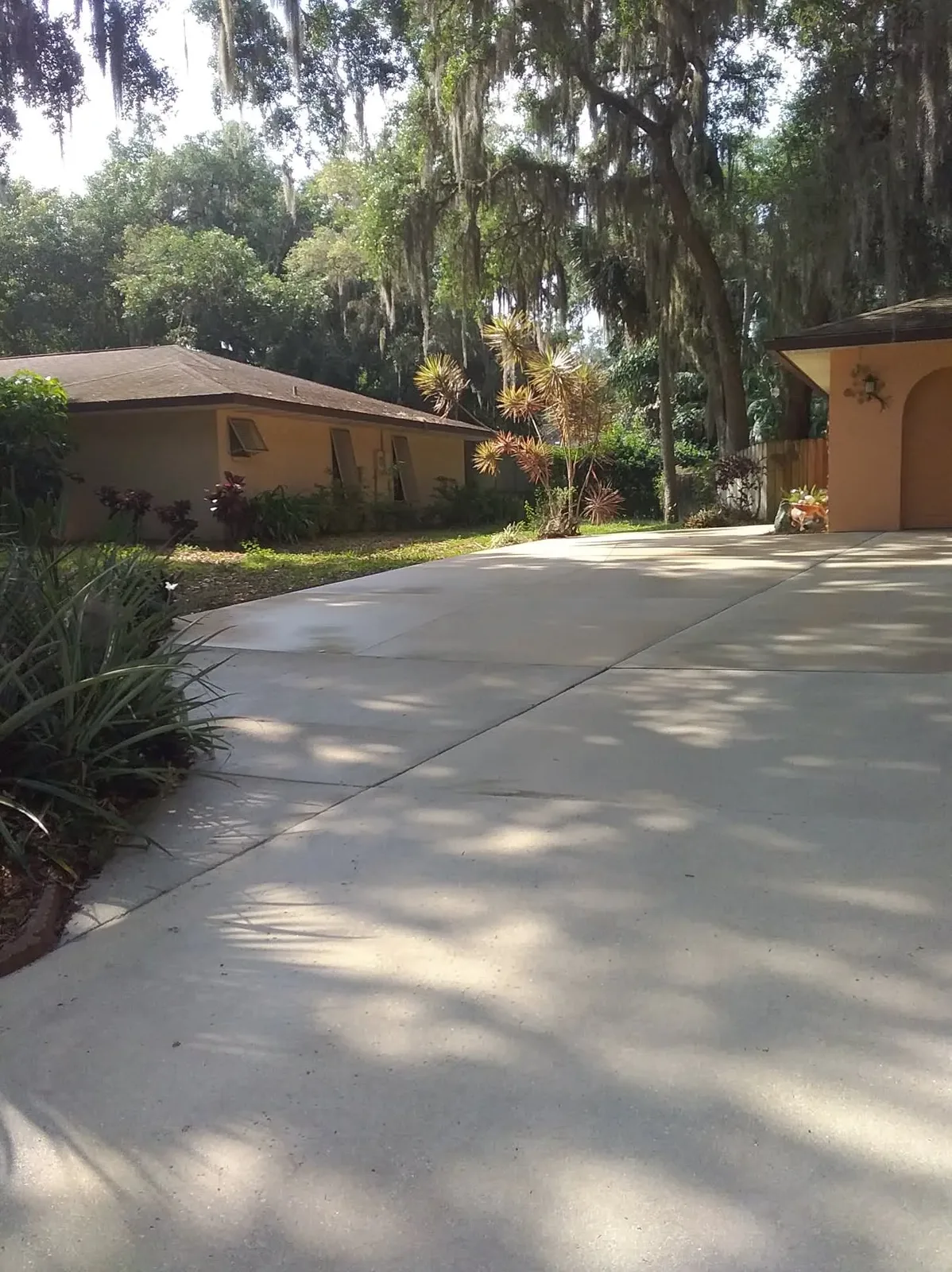
Concrete, brick pavers, sidewalks and curbing cleaned at 3000 to 4000 PSI. Hard surfaces only, where real pressure is the right tool.
See Driveway & Pavers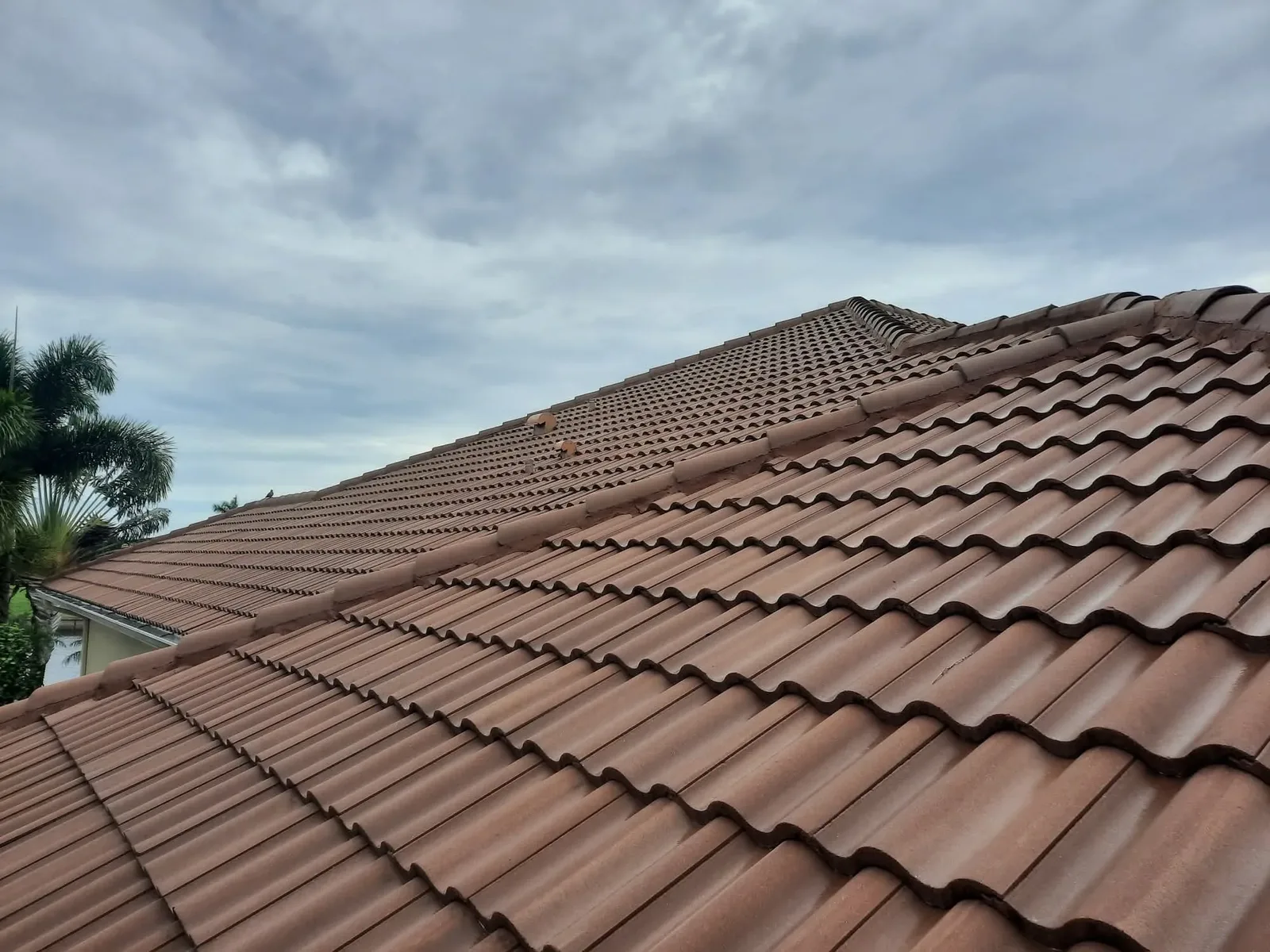
Soft wash roof cleaning for shingle, tile and metal at a maximum of 70 PSI. Streaks and growth come off without putting high pressure on your roof components.
See Roof CleaningFree estimates, no obligation. Send a photo and get a real number back, online, by text or over the phone.